England · 1381 · Peasants’ Revolt
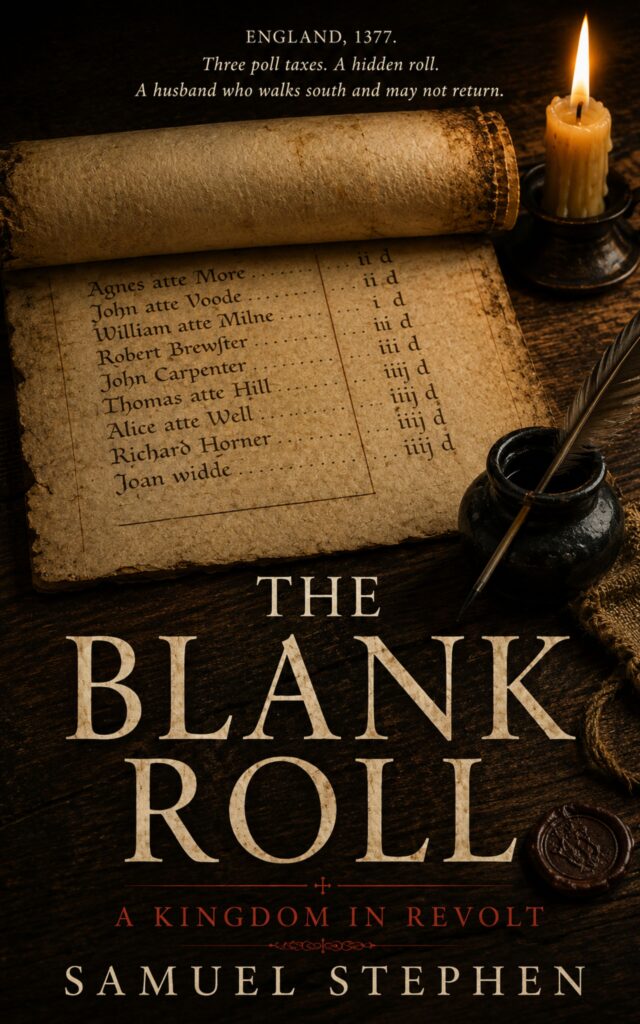
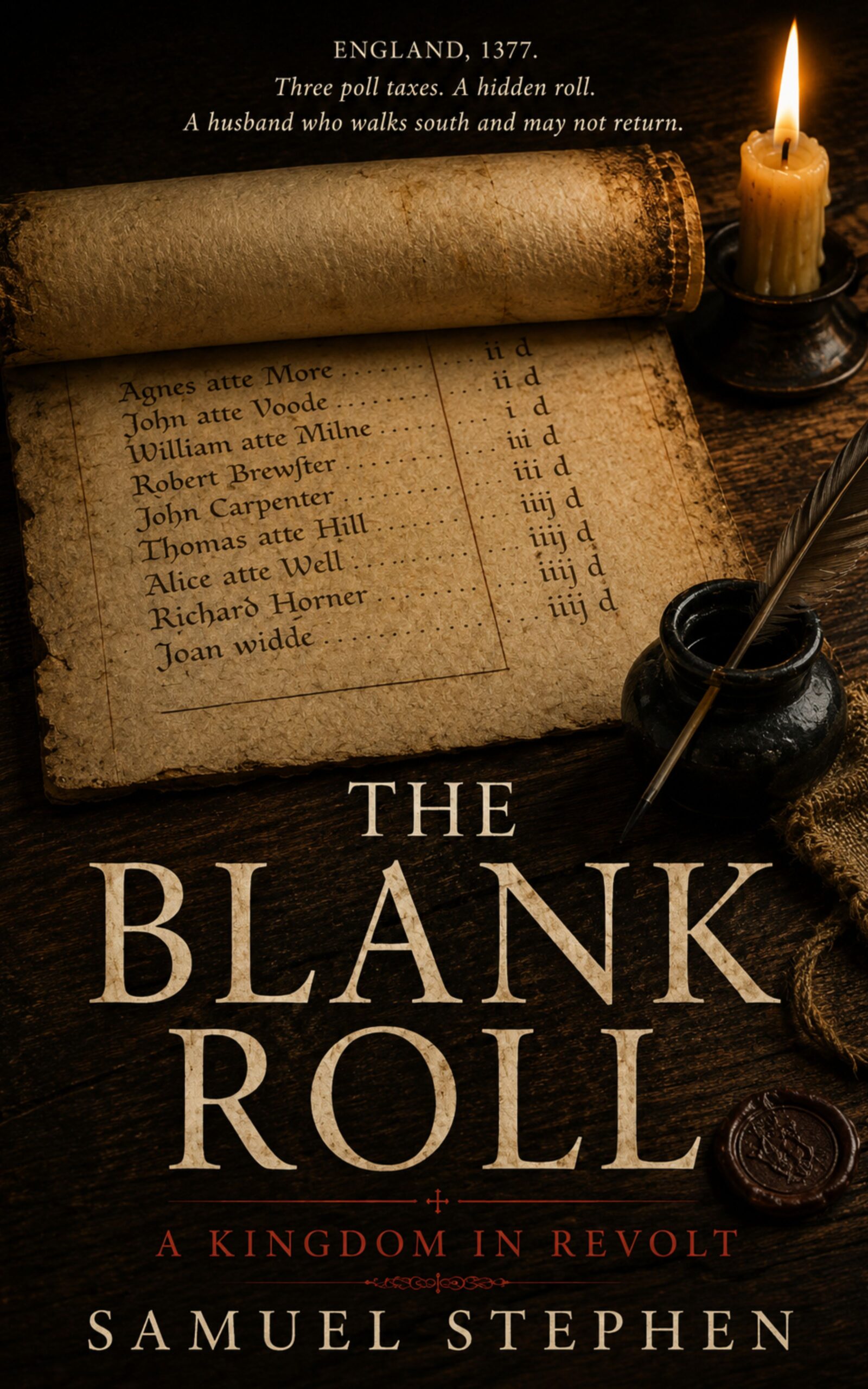
The Blank Roll: A Kingdom in Revolt
Every rebellion starts with a name on a list.
England, 1381. The Crown is hungry for money, and the villages are expected to provide it. Again.
Walter Tyrell, a reeve who can read and write just well enough to be useful, is ordered to help count the people around him. Alys, a woman trying to keep her household alive, understands that every answer given to authority can become evidence.
The story
Clerks, commissioners, widows, labourers and neighbours are drawn into a machinery of taxation that has stopped asking what people can bear.
The roll is meant to be blank. Neutral. Administrative. Harmless.
But names have weight. Numbers have consequences. And when a government begins to count the poor as if they are coin, the poor begin to count one another.
For readers of
Literary historical fiction
A tense village-level story of records, fear, silence, betrayal and the first sparks of revolt.
The pressure point
Would you lie?
Would you lie to a government official to protect your neighbour? What if the lie could cost your own family?
The approach
Bottom-up history
Not kings first. Not commanders first. Doors, tables, church halls, handwriting, small lies and private calculations.
Book club questions
- At what point does obedience become complicity?
- Which is more dangerous in the novel: poverty, silence or paperwork?
- Does Walter have power, or is he merely useful to power?
- What does the blank roll symbolise by the end of the story?
- Does the novel present rebellion as sudden or accumulated?