For readers of
Literary historical fiction
A tense village-level story of records, fear, silence, betrayal and the first sparks of revolt.
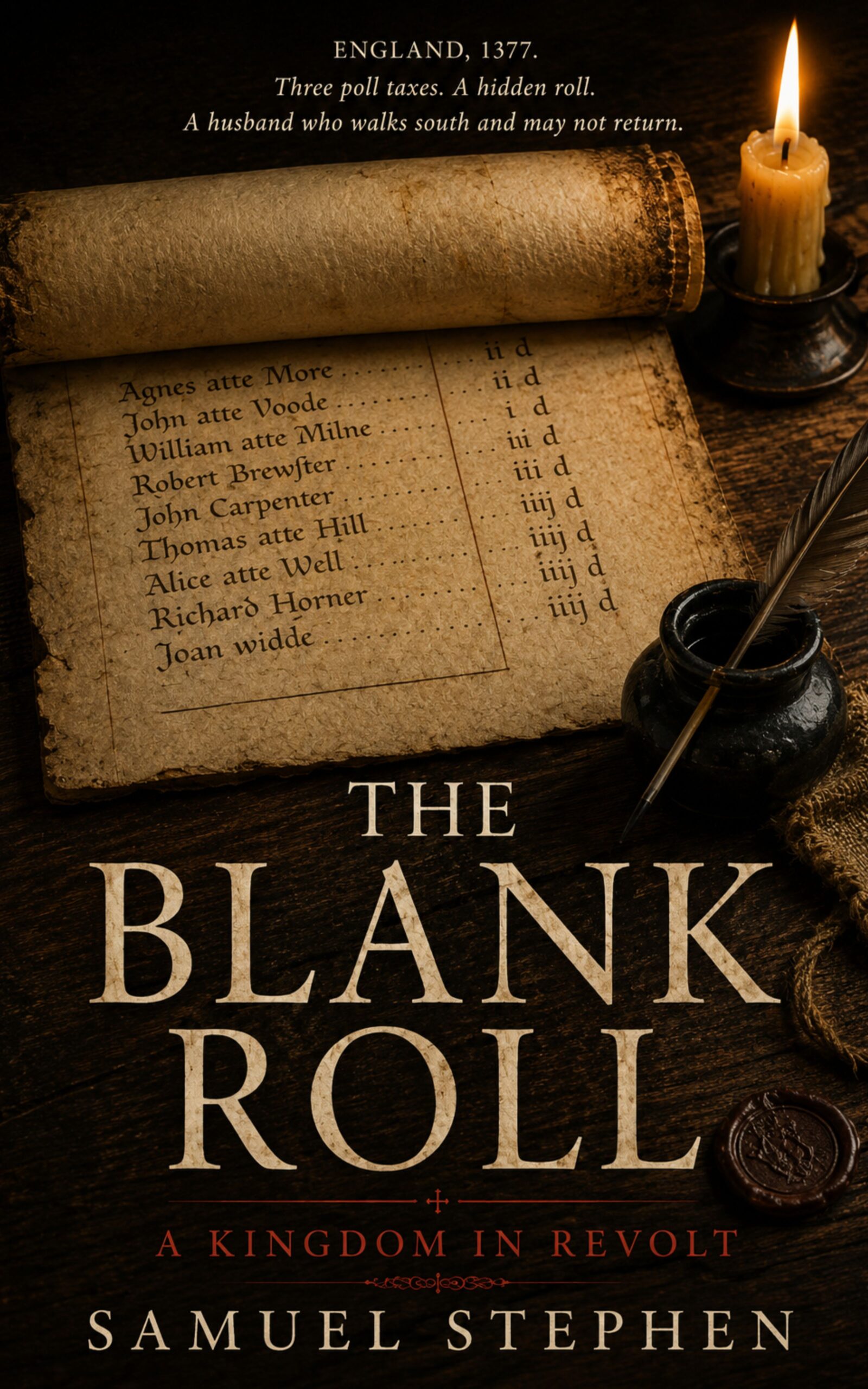
England · 1381 · Peasants’ Revolt
Every rebellion starts with a name on a list.
England, 1381. The Crown is hungry for money, and the villages are expected to provide it. Again.
Walter Tyrell, a reeve who can read and write just well enough to be useful, is ordered to help count the people around him. Alys, a woman trying to keep her household alive, understands that every answer given to authority can become evidence.
Clerks, commissioners, widows, labourers and neighbours are drawn into a machinery of taxation that has stopped asking what people can bear.
The roll is meant to be blank. Neutral. Administrative. Harmless.
But names have weight. Numbers have consequences. And when a government begins to count the poor as if they are coin, the poor begin to count one another.
For readers of
A tense village-level story of records, fear, silence, betrayal and the first sparks of revolt.
The pressure point
Would you lie to a government official to protect your neighbour? What if the lie could cost your own family?
The approach
Not kings first. Not commanders first. Doors, tables, church halls, handwriting, small lies and private calculations.
Research behind the novel
The historical work behind The Blank Roll is being recovered from the Samuel Stephen Chronicles archive and placed here permanently. Start with the post-plague labour market, then follow the legal pressure, John Ball’s radical language and the documentary problem surrounding John Bampton at Brentwood.
Labour scarcity, rising wages and the legal reaction after 1348.
The church record, the preacher and the language of revolt.
What the Patent Roll actually says about the official at the opening of the Essex rising.